
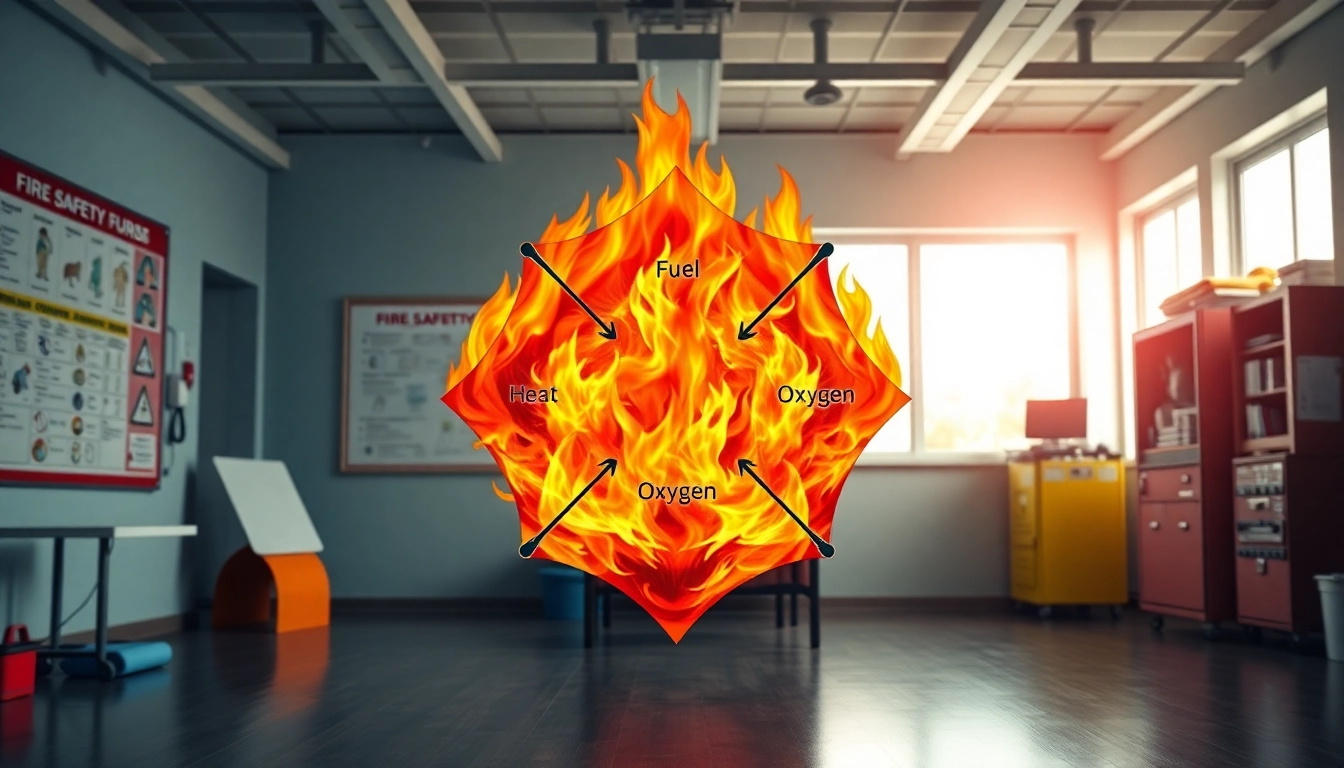
The Concept of Fire Tetrahedron
The fire tetrahedron is an advanced model that enhances our understanding of fire dynamics compared to older models like the fire triangle. Comprised of four essential elements—fuel, heat, oxygen, and a chemical chain reaction—the fire tetrahedron offers a comprehensive framework that is vital for fire safety education and effective firefighting strategies. Understanding this model aids in combating fires more efficiently by allowing individuals to identify and eliminate any one of these four critical components necessary for a fire to ignite and sustain.
Defining Each Component
Within the context of the fire tetrahedron, each component plays a crucial role in the ignition and sustenance of fire:
- Fuel: Any material that can combust, including solids, liquids, and gases.
- Heat: The energy source that raises the fuel’s temperature to its ignition point.
- Oxygen: A necessary oxidizing agent that supports the combustion process.
- Chemical Chain Reaction: The series of chemical reactions that occur when fuel and oxygen react in the presence of heat to sustain the fire.
Fire Tetrahedron vs. Fire Triangle
While both the fire triangle and fire tetrahedron illustrate the conditions necessary for a fire to occur, the key distinction lies in the addition of the chemical chain reaction in the tetrahedron model. The fire triangle includes only the three components: heat, fuel, and oxygen. By adding the chemical reaction, the tetrahedron accounts for the complexities involved in fire behavior and its sustainability. This understanding is crucial for implementing effective fire prevention and suppression strategies since disrupting any one of these four elements can effectively extinguish a fire.
Importance in Fire Safety
The relevance of the fire tetrahedron extends beyond theoretical knowledge. It plays a significant role in fire safety protocols, enabling firefighters and safety professionals to devise comprehensive strategies for fire prevention, containment, and control. By recognizing the interplay between the four components, they can develop targeted approaches to minimize fire hazards in various environments, whether residential, commercial, or industrial.
Components of the Fire Tetrahedron
Fuel: The Fire Starter
Fuel is the most fundamental component of the fire tetrahedron. It encompasses a multitude of materials—solid, liquid, or gas. Common examples include wood, paper, gasoline, and propane. Understanding the various types of fuel and their ignition characteristics is vital for both preventing fires and for effective firefighting efforts. For instance, flammable liquids require different handling and storage practices than solid fuels, and recognizing these differences can mitigate the potential for fire outbreaks.
Heat: The Energy Source
Heat, the second component, can originate from numerous sources, including thermal, chemical, electrical, or mechanical energy. Each type can raise the temperature of the fuel to its ignition point. It is essential not only for igniting a fire but also for sustaining it. Consequently, effective fire safety practices often focus on controlling heat sources within a given environment, such as maintaining electrical systems and employing safe practices for heating appliances.
Oxygen: The Sustaining Element
The third and equally vital component of the fire tetrahedron is oxygen. Generally, atmospheric air contains approximately 21% oxygen, which is adequate to support the combustion process. However, certain conditions, such as high-pressure environments or enriched oxygen atmospheres, can significantly alter fire behavior, causing more intense and uncontrollable fires. Firefighting strategies might involve displacing or reducing oxygen levels, which can help extinguish flames effectively.
Chemical Chain Reaction in Fire
Understanding Combustion
The chemical chain reaction is pivotal for igniting and maintaining fire. This reaction occurs when the fuel combusts in the presence of heat and oxygen, leading to further fuel combustion. The nature of this chain reaction can vary depending on the types of fuel and environmental conditions. A thorough understanding of this process allows firefighters to create strategies that can effectively interrupt combustion processes.
Role of the Reaction in Fire Development
The dynamics of the chemical chain reaction illustrate how fires can spread rapidly or smolder slowly, depending on the nature of the fuel, the available oxygen, and the heat being generated. For example, certain fuels can produce volatile gases that ignite and contribute to fire spread, underscoring the importance of fuel selection in fire prevention. Recognizing the stages of fire development, from ignition to the fully developed fire, informs effective firefighting tactics.
How to Interrupt the Chain Reaction
Interrupting the chemical chain reaction is a critical firefighting strategy. This can be achieved through various methods such as cooling the fire, reducing fuel availability, or displacing oxygen. Each firefighting method employed, from water application to the use of foam or chemicals, targets one or more of the fire tetrahedron components to effectively extinguish the fire. Understanding the physics and chemistry at play enhances the effectiveness of these interventions.
Application of Fire Tetrahedron in Fire Safety
Preventive Measures
Fire prevention strategies leverage the fire tetrahedron’s elements to create safe environments. This includes storage practices that minimize the availability of fuels, proper maintenance to mitigate heat sources, and ensuring adequate ventilation to maintain safe oxygen levels. Training personnel on fire hazards and encouraging a culture of safety can further enhance prevention efforts.
Fire Suppression Techniques
Various fire suppression techniques are directly informed by the fire tetrahedron model. Techniques such as water cooling, foam application, and the use of dry chemical extinguishers can directly impact one or more elements of the tetrahedron. Training for firefighters often emphasizes understanding how to combat each element proactively to ensure quick and effective responses to fire incidents.
Training and Education Importance
Education regarding the fire tetrahedron is paramount for both professional firefighters and the general public. Effective training programs emphasize recognition of fire hazards and understanding how to safely manage each element of the tetrahedron. This education enables individuals to perform risk assessments, thereby contributing to safer environments in homes, workplaces, and communities.
FAQs about Fire Tetrahedron
What are the 4 elements of the fire tetrahedron?
The fire tetrahedron includes four essential components: fuel, heat, oxygen, and the chemical chain reaction. Each is crucial for a fire to ignite and sustain.
How does the fire tetrahedron differ from the fire triangle?
The fire tetrahedron adds a fourth component, the chemical chain reaction, to the fire triangle’s three elements—fuel, heat, and oxygen—providing a more comprehensive understanding.
Why is understanding the fire tetrahedron important?
Understanding the fire tetrahedron is crucial for developing effective fire prevention and safety strategies, helping individuals recognize what is needed to ignite and extinguish fires.
What role does each element play in fire behavior?
Fuel provides material; heat ignites it; oxygen sustains burning; and the chemical chain reaction facilitates the process of combustion, creating a fire.
How can the fire tetrahedron model aid in firefighting?
The fire tetrahedron model aids firefighters by helping them recognize how to eliminate one of the four components to extinguish a fire effectively, enhancing safety and effectiveness.